
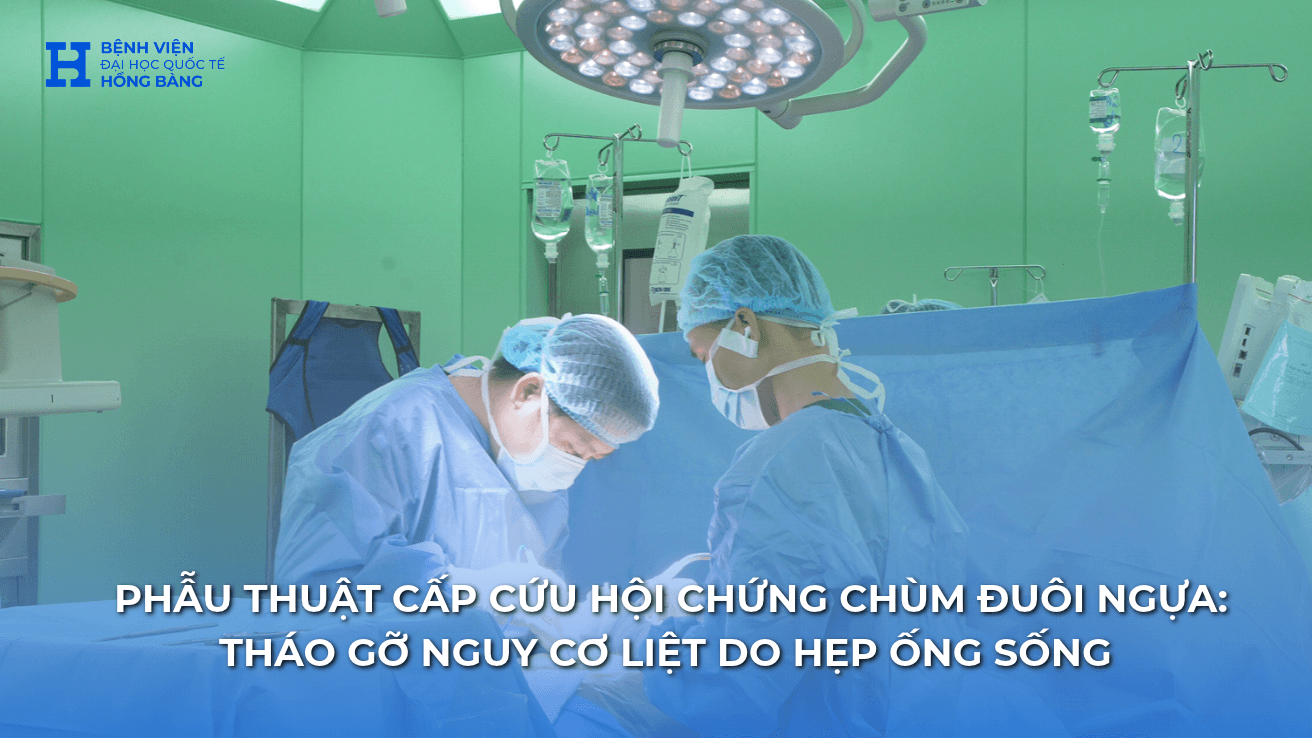
Hong Bang International University Hospital has recently received and successfully performed emergency surgical intervention for a case of cauda equina syndrome caused by severe spinal stenosis. Previously, despite visiting multiple medical facilities, the patient had not found the cause, leading to severe progression of neurological damage.
1. The challenge of emergency surgery on severe neurological damage
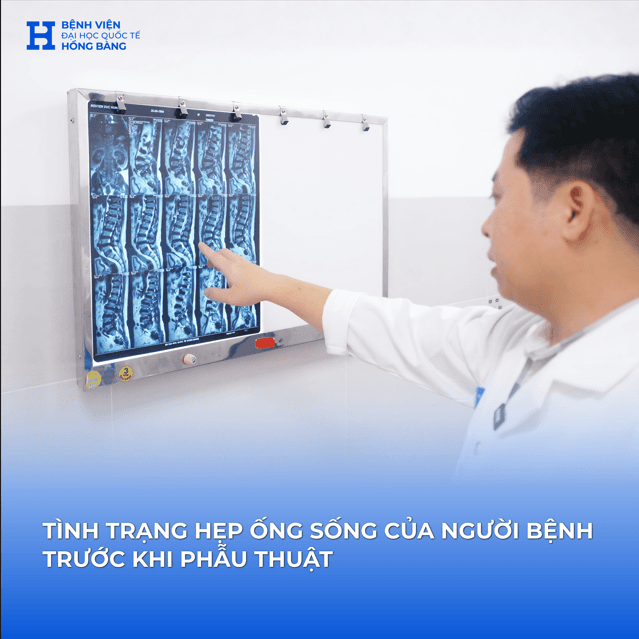
Dr. Nguyễn Văn Toại, Specialist Level I - Department of Neurosurgery - Orthopedics, stated that the magnetic resonance imaging (MRI) results of the patient's lumbar spine recorded a disc herniation at the L4 - L5 level accompanied by spondylolisthesis causing very severe spinal stenosis. The spinal canal area was so severely compressed that neurological structures were almost invisible, causing urinary retention, weakness in both legs, and numbness in the patient's genital area.
In addition, because the patient was being treated for multiple complex underlying medical conditions, the risk of intraoperative bleeding was significantly increased. Long-term hypertrophic degenerative structures also deformed anatomical landmarks, causing many difficulties for surgical maneuvers. After an urgent consultation with Internal Medicine and Anesthesiology specialists, the team decided to perform emergency surgery to promptly release the compression and maximize the preservation of neurological function. After 2 hours, the surgery proceeded completely smoothly.
2. Early postoperative mobility recovery, preventing complications from prolonged bed rest
For elderly patients or those with many underlying medical conditions, postoperative mobility is often poorer compared to younger people. Prolonged immobilization after surgery increases the risk of facing dangerous complications such as thromboembolism, urinary tract infections, or pressure ulcers. Therefore, from the very first day after surgery, the patient was guided by the Rehabilitation Technician team to practice physical therapy and began early movement right at the bedside.
3. Expert recommendations: Early recognition of Cauda Equina Syndrome signs
Cauda equina syndrome is a serious neurosurgical emergency. If not detected and decompressed in time, it can lead to permanent disability or loss of bladder control.
Dr. Nguyễn Văn Toại, Specialist Level I, recommends that people should promptly take their relatives to medical facilities with Neurosurgery departments for examination as soon as the following warning symptoms appear:
Bowel and bladder dysfunction: Urinary retention, difficulty urinating, or bowel and bladder incontinence.
Motor impairment: Weakness or paralysis of both legs, unsteady gait.
Sensory disturbances: Numbness, loss of sensation in the genital area, perineum, and anus (saddle area).
Correct diagnosis of the cause and early decompression surgery are the decisive keys to preserving neurological function and helping patients return to their normal daily lives early.