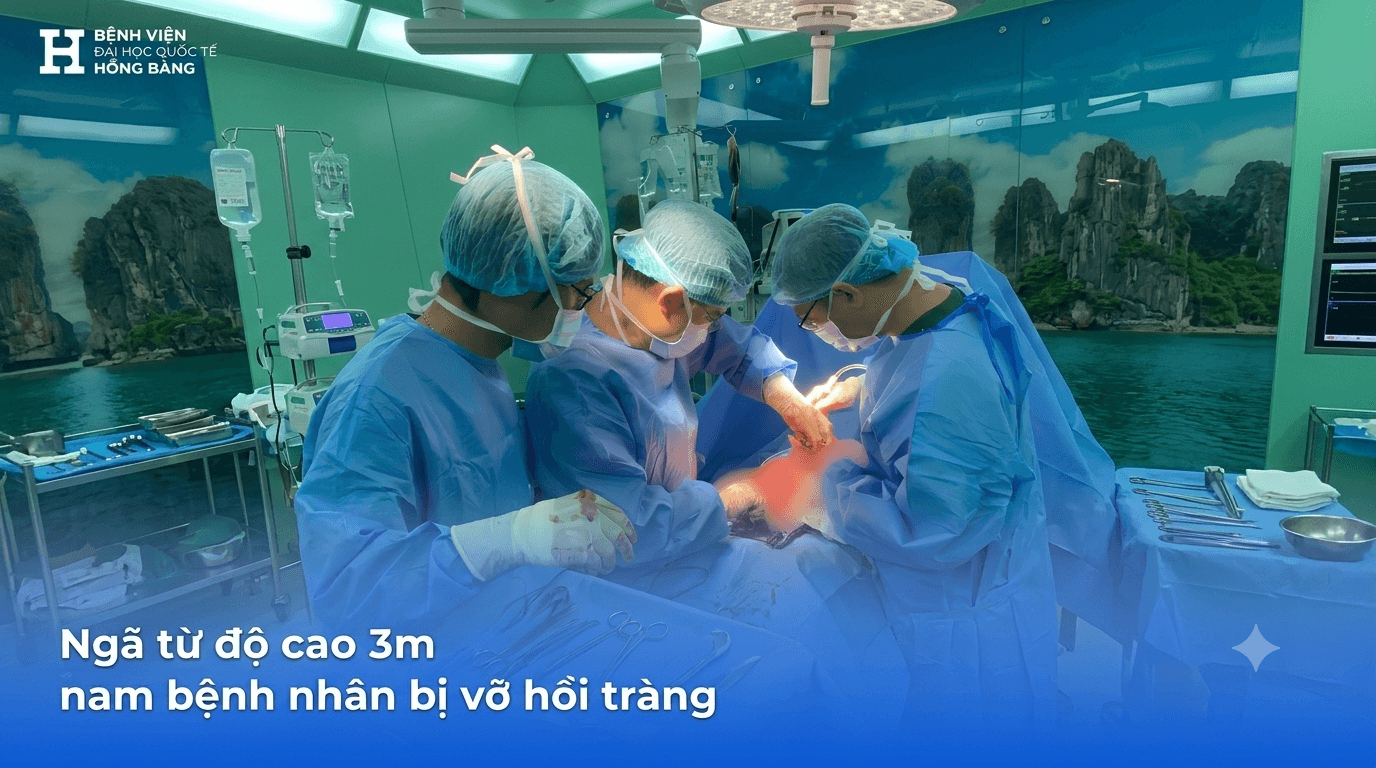
A 43-year-old male patient was admitted for emergency care following a workplace accident involving a fall from a height of approximately 3m, causing multiple traumas: concussion, displaced fracture of the left maxilla, and intra-abdominal bleeding.
The patient fell into a state of hypotension due to acute blood loss. During surgery, doctors discovered torn mesenteric vessels of the ileum, severe bruising of the corresponding intestinal segment, and complex tears in multiple locations of the seromuscular layer of the sigmoid colon.
According to TS.BS. Trịnh Văn Thảo, Head of the Department of Gastroenterology - Hepatobiliary - Pancreatic Surgery, this was a complex multi-trauma case with a life-threatening risk due to severe and urgent blood loss of approximately 2 liters.
After consultation, the surgical team decided to resect the damaged ileal segment to control the source of bleeding and performed sutures to repair the seromuscular layer of the colon, avoiding a colectomy and the need for a colostomy.
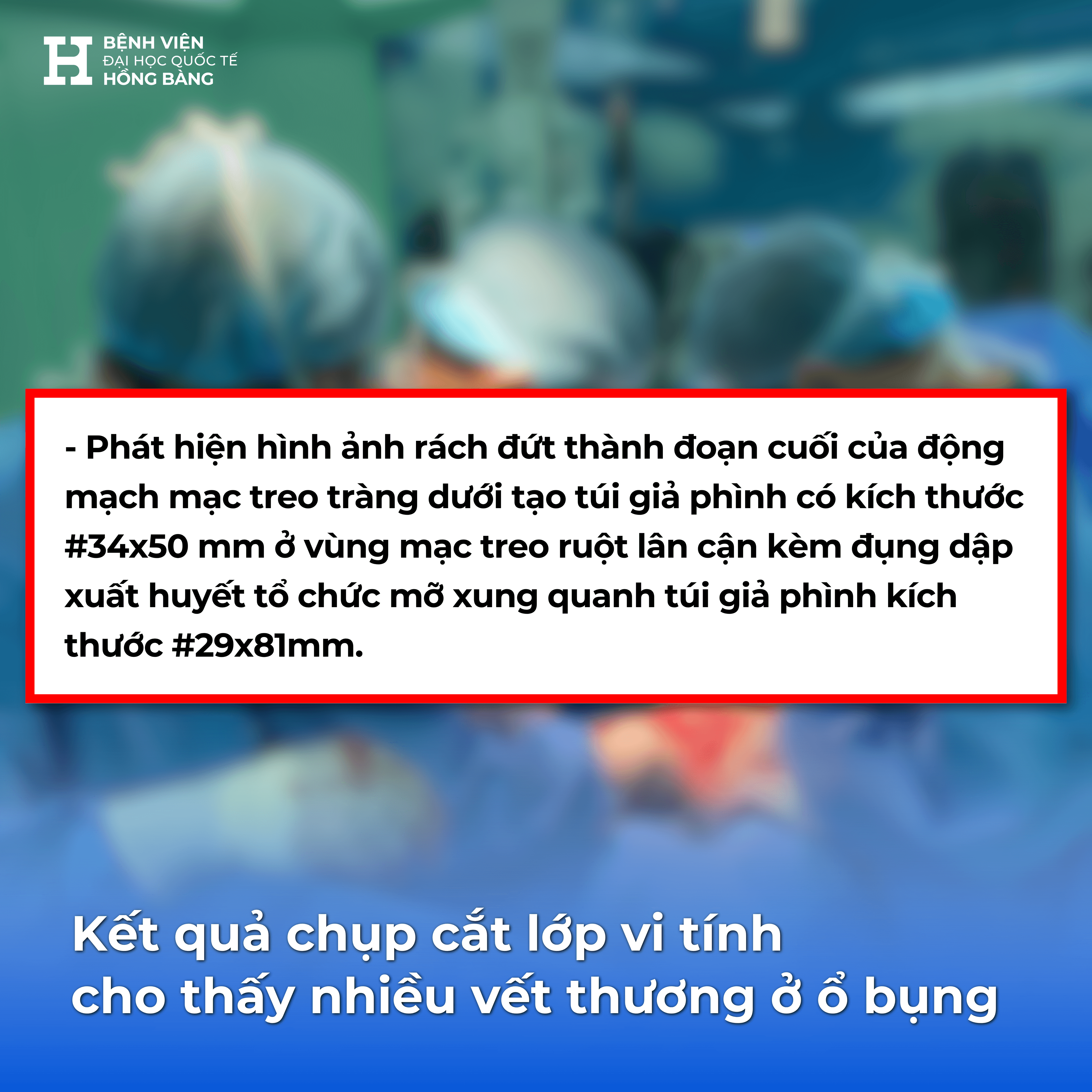
Loss of approximately 2 liters of blood, 45cm of ileum resected to control bleeding
Faced with acute blood loss and the risk of progressive shock, doctors decided on emergency abdominal surgery to locate and identify the injuries and control the continuous bleeding affecting the patient's blood pressure and cardiovascular indices.
During the procedure, the team noted blood in the abdominal cavity and torn mesenteric vessels of the ileum. The corresponding intestinal segment was severely bruised with many nourishing vessels stripped away. The estimated blood loss due to multiple abdominal traumas was about 2 liters.
According to the team's assessment, the damaged ileal segment was no longer salvageable. If only primary repair were performed at the injury site, bleeding control and the blood supply to the intestinal segment would not be guaranteed. Therefore, the doctor decided to resect about 45cm of the severely bruised ileum to remove the damaged area and control the hemorrhage.
The entire surgical process was carried out urgently in about 1 hour, with coordination between specialties to simultaneously treat the post-accident injuries, prioritizing bleeding control and ensuring patient safety.
Patient conscious after 4 days of treatment
Following surgery and resuscitation, the patient's condition gradually stabilized, and digestive function returned. After 4 days of treatment, the patient is conscious and continues to be monitored for postoperative care.
The above case demonstrates the danger of blunt abdominal trauma after an accident, especially when mesenteric vascular injuries can cause massive intra-abdominal bleeding, leading to acute blood loss and hypotension. These injuries are not always obvious from the outside but can progress rapidly and become life-threatening.
.
Doctors recommend that after a workplace accident or a fall from a height, the victim should be taken to a medical facility for a comprehensive examination and evaluation, even if abnormal signs have not fully appeared.
Timely emergency care, early detection of injuries, and the selection of appropriate treatment methods are crucial in limiting complications and preserving the patient's life.