
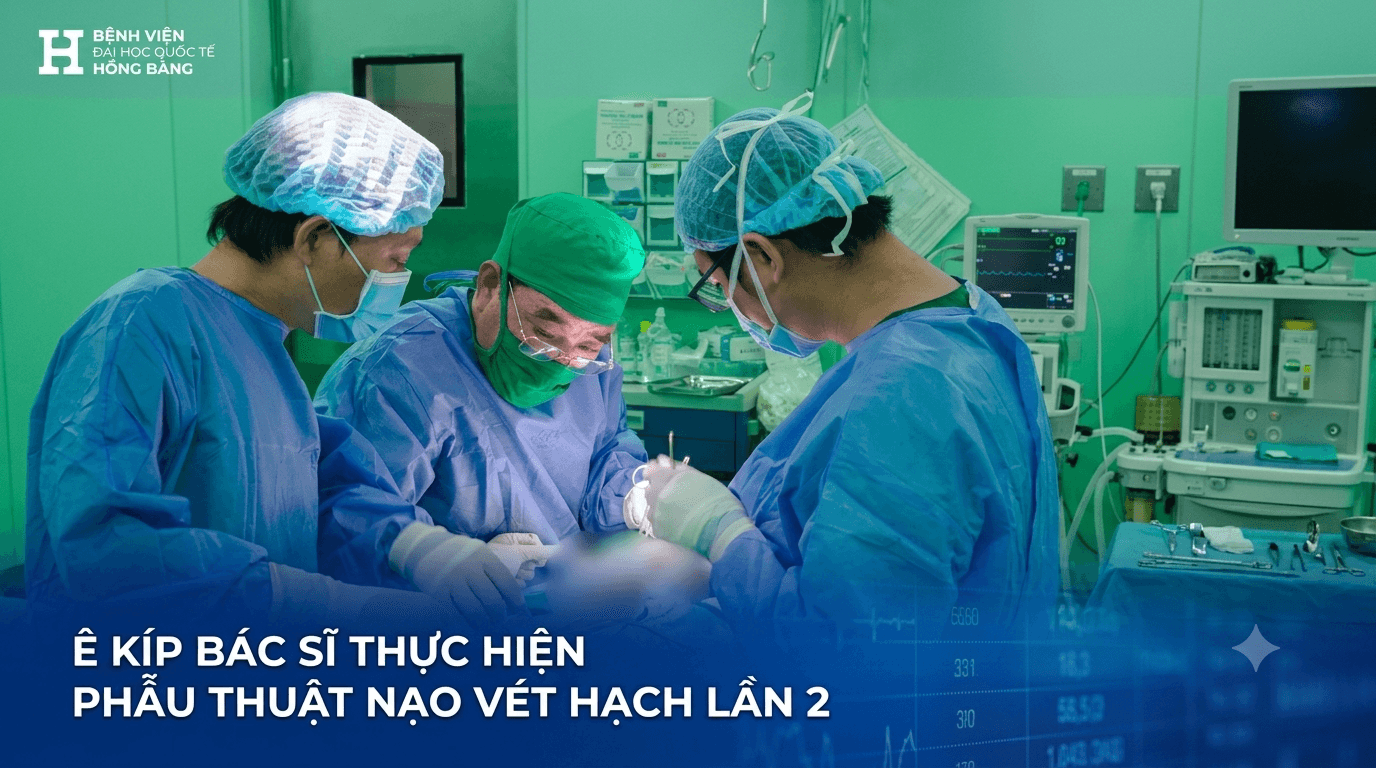
The major challenge when patients experience recurrent cervical lymph nodes after thyroid cancer treatment: Second lymph node dissection surgery, discharged after 48 hours.
Following a total thyroidectomy and radioactive iodine I-131 treatment, a 28-year-old male patient continued to be monitored periodically every 3 months. During the fourth follow-up visit, ultrasound results detected suspicious metastatic cervical lymph nodes in multiple groups: II, III, IV, and VIb. Fine-needle aspiration (FNA) results at these node locations confirmed papillary thyroid carcinoma cells.
Detecting recurrent lymph nodes through periodic examinations
Notably, the patient did not present with any neck pain symptoms. The lymph nodes were small and could not be felt through clinical examination. The lesions were only detected via ultrasound and their nature was confirmed by FNA testing.
According to the treating physician, a common characteristic of papillary thyroid cancer is cervical lymph node metastasis. Therefore, even after thyroidectomy and I-131 treatment, patients still need periodic monitoring to detect recurrent lesions early, even when clinical manifestations are not yet present.
Second lymph node dissection surgery: Focusing on preserving vascular and neurological structures
Given the recurrence of lymph nodes in multiple cervical groups, the doctor decided to perform a lateral neck dissection combined with the management of group VIb lymph nodes.
This is a surgery that requires caution during the dissection process because the neck area concentrates many important anatomical structures.
During the surgery, the team focused on preserving the jugular vein, carotid artery, and the vagus nerve (cranial nerve X) to limit the risk of vascular and nerve damage while ensuring the goal of removing pathological lymph node lesions.
All surgical specimens were sent for histopathology to be evaluated and to serve as a basis for the subsequent treatment plan.
Continuing treatment and long-term follow-up after surgery
The patient still needs to be monitored over a long period through examination methods, tests, and diagnostic imaging as professionally indicated.
This case once again shows that thyroid cancer treatment does not stop at the initial surgery. Attending follow-up appointments on schedule, closely monitoring disease progression, and choosing appropriate intervention methods play a vital role in long-term disease control.
Hong Bang International Hospital - Accompanying patients on the journey of treatment and healthcare.