
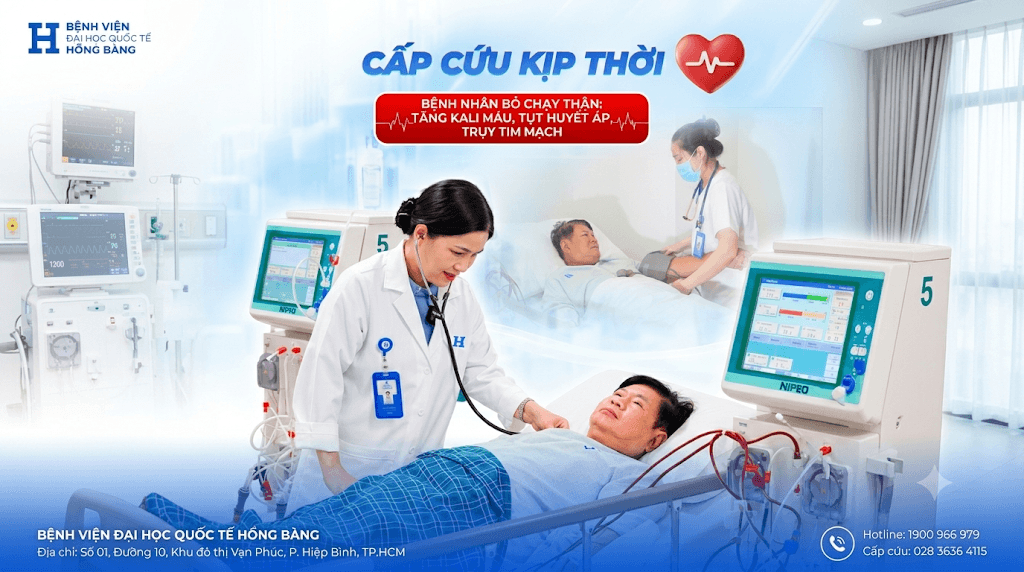
Patient N.V.D (58 years old), with a history of periodic hemodialysis, was admitted to Hong Bang International University Hospital after skipping a dialysis session due to a personal schedule.
At the time of admission, the patient showed signs of cardiovascular collapse, a slow and erratic heart rate of about 25-28 beats/minute, blood test results showing 7 mmol/l, blood pressure at 70/60 mmHg, tall peaked T-waves, slow response to verbal stimuli, numbness in limbs, and abdominal distension.
Upon examination, doctors noted hyperkalemia, with a risk of leading to cardiac arrest.
Faced with the acute progression, the Hemodialysis Unit immediately activated the hospital-wide Red Alert protocol, mobilizing the Emergency Resuscitation team to quickly implement emergency measures and attach a monitor for ECG tracking.
According to Meritorious Doctor, Specialist Level II Physician Pham Thi Hai Yen - Head of the Hemodialysis Unit, the team established an intravenous line, using Calcium, Insulin combined with Glucose according to the hyperkalemia treatment protocol to stabilize the electrical activity of the myocardium and control the risk of complications. After the initial intervention, the patient's blood pressure improved to 120/80 mmHg, the heart rate reached 70 beats/minute, blood potassium returned to 3.2 mmol/l, and T-waves became normal.
Once the circulatory status improved, the patient was transferred for emergency dialysis to remove excess potassium and bring the indicators back to safe thresholds. After the dialysis process and intensive treatment, the patient's health gradually stabilized, and he was safely discharged. This case serves as a warning about the importance of adhering to the dialysis schedule.
For patients with chronic kidney failure undergoing periodic dialysis, voluntarily skipping or delaying the dialysis schedule can cause potassium to accumulate in the blood, increasing the risk of cardiac arrhythmias and serious cardiovascular complications.
Patients must adhere to the dialysis schedule, monitor their health, and discuss with their treating physician any changes to the schedule. Do not voluntarily interrupt treatment for personal reasons.
Hong Bang International University Hospital focuses on emergency coordination capacity, promoting the expertise of the medical team to promptly handle dangerous situations and ensure patient safety.