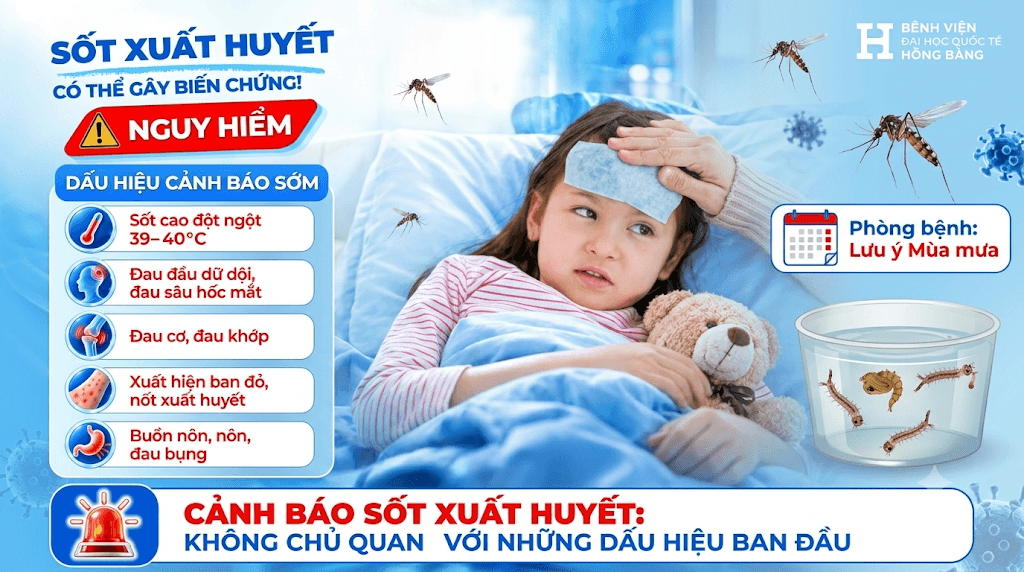

Prolonged rainy seasons combined with erratic weather create ideal conditions for the flu virus to develop and spread rapidly. With an immature immune system, young children are a highly vulnerable group for contracting the disease and experiencing dangerous complications if not detected and cared for properly. Hong Bang International University Hospital (HIU Hospital) advises parents absolutely not to be subjective regarding the early signs of seasonal flu in children.
Damp Environments - Ideal Conditions for Seasonal Flu Outbreaks
Prolonged heavy rain, humid air, and fluctuating temperatures create a favorable environment for viruses and bacteria to thrive and spread rapidly through respiratory droplets when an infected person coughs, sneezes, or talks.
In young children, an incomplete immune system makes them a primary "target" for the seasonal flu virus. Initially, the disease often starts with symptoms that are easily confused with a common cold, such as a mild cough, fever, fatigue, body aches, or fussiness. However, if not closely monitored, seasonal flu in children can progress rapidly into respiratory failure, pneumonia, or dangerous bacterial superinfections.
Warning Signs Requiring Urgent Hospitalization
To ensure the safety of the child, parents must absolutely not self-administer antibiotics or subjectively monitor the child at home when abnormal symptoms occur. Parents need to take the child to the nearest medical facility immediately if any of the following dangerous warning signs are noted:
Respiratory abnormalities: The child has difficulty breathing, rapid breathing, wheezing, or deep chest retractions when inhaling.
Prolonged high fever: A continuous high fever above 39 degrees Celsius that does not subside despite taking prescribed fever reducers, or a recurring fever after 1–2 days of improvement (a warning sign of bacterial superinfection).
Signs of oxygen deficiency: Bluish lips or fingernails, grayish or pale skin.
Neurological & Systemic damage: The child is lethargic, sluggish, difficult to wake up, experiences seizures, or vomits excessively and cannot eat or drink.
Chest pain: The child complains of persistent chest pain, tightness, or cries intensely when the chest is compressed.
Proactively Preventing Seasonal Flu for Children When the Weather Turns Cold
To protect children's health against the seasonal flu wave, doctors from the Department of Pediatrics – Hong Bang International University Hospital recommend that parents implement the following proactive prevention measures:
Annual seasonal flu vaccination: This is the most effective measure to create active immunity, reducing the infection rate as well as the severity of complications.
Clean hand hygiene: Train children in the habit of washing their hands frequently with soap and clean water for at least 20 seconds, especially before eating and after using the toilet.
Wearing medical-grade masks: Have children wear masks when going out, in crowded places, or when in contact with people showing symptoms of coughing or fever.
Keeping the body warm: Pay attention to keeping sensitive areas warm, such as the neck, chest, and feet, when the weather turns cold or when the child is in an air-conditioned room.
Boosting resistance & Environmental hygiene: Provide children with a nutritious diet, vitamin supplements, encourage appropriate physical activity, and keep the house well-ventilated and clean.
With a team of experienced and dedicated doctors, along with a friendly and modern medical space, HIU Hospital is always a reliable medical support for parents on the journey of raising healthy children.